Wildlife and Conservation
The Conservation of wildlife is important to us here at the SWCC. Not only does it help support all life on Earth, but it also helps ensure that future generations can enjoy the environments in their natural state and the incredible species inhabiting our beautiful property. Conservation of wildlife promotes pollination in our prairie as well as protecting the ecological stability.
Summer Wildlife Highlights
Prairie Life 🌾
Plants
Jack in the Pulpit (also called Arisaema triphyllum) typically grows 1-2 feet but can sometimes grow twice the size. It has a distinct hooded spathe (the “pulpit”) that encases a spadix (the “Jack”), and blooms from April to June. You may notice it has green and maroon stripes, its appearance looks tropical, and you’ll see it along the forest floor. This plant produces bright red berries that can be enjoyed by birds.
Wild Bergamot (also called Monarda fistulosa) grows inches per day, getting to 2 – 4 feet tall, loves the sun, and is great for attracting wildlife like bees, butterflies, and hummingbirds. It’s tubular flower shape is perfect for long-tongued pollinators.
Indian Grass (also called Sorghastrum nutans) also grows inches per day, getting to 2-7 feet tall, is a native perennial bunch grass, and can withstand droughts; perfect for life in the prairie. This grass thrives in the sun and is a great environment for supporting songbirds and gamebirds.
Birds 🐦
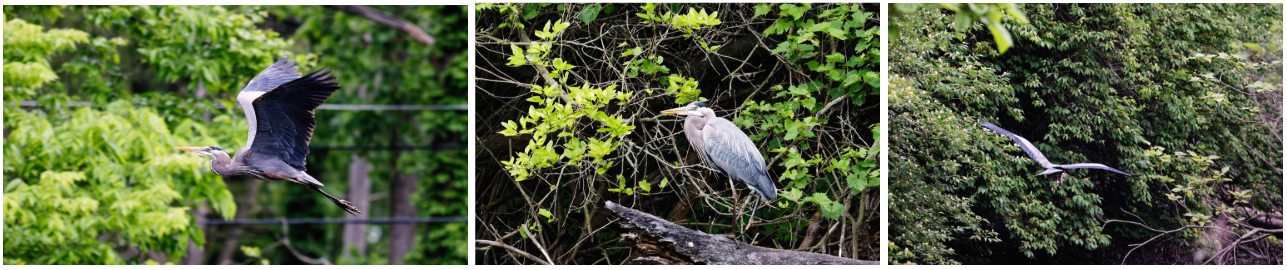
Great Blue Heron
Meet the Great Blue Heron, a beautiful and graceful bird, part of the Ardeidae family, long-legged wading birds. You may see one during the day flying over one of the ponds at the SWCC or wading near the edge of the water chilling or waiting for prey. They eat a variety of things from fish to amphibians, to insects, to other birds, or small mammals. Trees are mainly where Great Blue Herons nest, although sometimes they nest on the ground, or bushes and in parts of a structure. Males collect the nest material, gathering sticks or things from other Herons nests, and present it to the female, she then weaves the nest, adds more materials like moss, dry grass, pine needles, etc. There will be 2-6 eggs after about 1 month of incubating, and then a 2 1/2 month nestling period. These birds can live for a while, the oldest Great Blue Heron ever recorded was 24 years and 6 months old, found in Texas. You may see these guys in the day or night, due to their high percentage of rod-type photoreceptors in their eyes to help improve night vision.
Source* Great Blue Heron Life History, All About Birds, Cornell Lab of Ornithology
Member Contributions:
Inspirational Narrative
By Dr. Lou Weber
Take just one moment to really think about a favorite day at the lake. Perhaps you
remember mist coming off of perfectly still water at daybreak. Maybe you feel the power
and wonder of propelling a boat from the shore and watching the wake as you slowly
move toward your destination. Maybe it’s the sight of a deer taking a drink from the
shore, then locking eyes with you as you pass. Maybe it’s the anticipation you feel in
your first cast of the year, or the sound of the line when a big one pulls the bait and the
chase is on. Maybe it’s the wind in the trees on a perfect summer day when you realize
it sounds different than when wind blows through bare branches. Maybe it’s the taste of
a candy bar for lunch in a boat, or a cool drink. Maybe it’s the sight of sparkling
diamonds on the water as evening moves in. Or as darkness descends it’s the curious
sound of Cricket Frogs sounding like two stones clicking, or Green Frogs calling Gork,
Gork, Gork just after dark, or just above all this the haunting rumble of Jug-a-Rum from
Bullfrogs. It’s all still here at the Southwest Conservation Club. It’s summer. The water
is fine. What are you waiting for?
The Prairie Project
By Sarah Brandon
Over the years, the Southwest Conservation Club has supported conservational projects in Waynedale, from raising/releasing quail and pheasants, to honey bee harvesting, and planting a prairie on the property. Nine years ago this past December, one of our former presidents, Eddie Coble and the Heartland Restoration Service began planting the seeds that would soon grow into an entire functioning and surviving tall grass prairie, full of life and many native species.
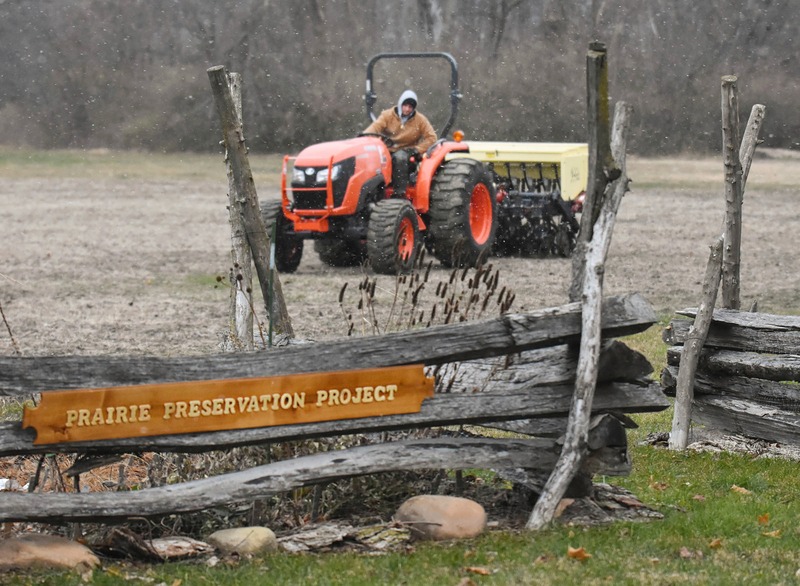
The idea started in May, 2016. Eddie presented his plan for a new addition to the front of the Southwest Conservation Club property, a prairie. He applied for a $1,000 grant with a plan to spend $900 on renting a Native-seed planting drill and the other $100 to purchase Indiana native seeds. After approval, the plan was set in motion and the prairie seeds were planted with the planting drill. Planting a prairie takes knowledge, planning, preparation, and after care. Eddie already had the knowledge and the plan drawn out. It was just a matter of making it happen.
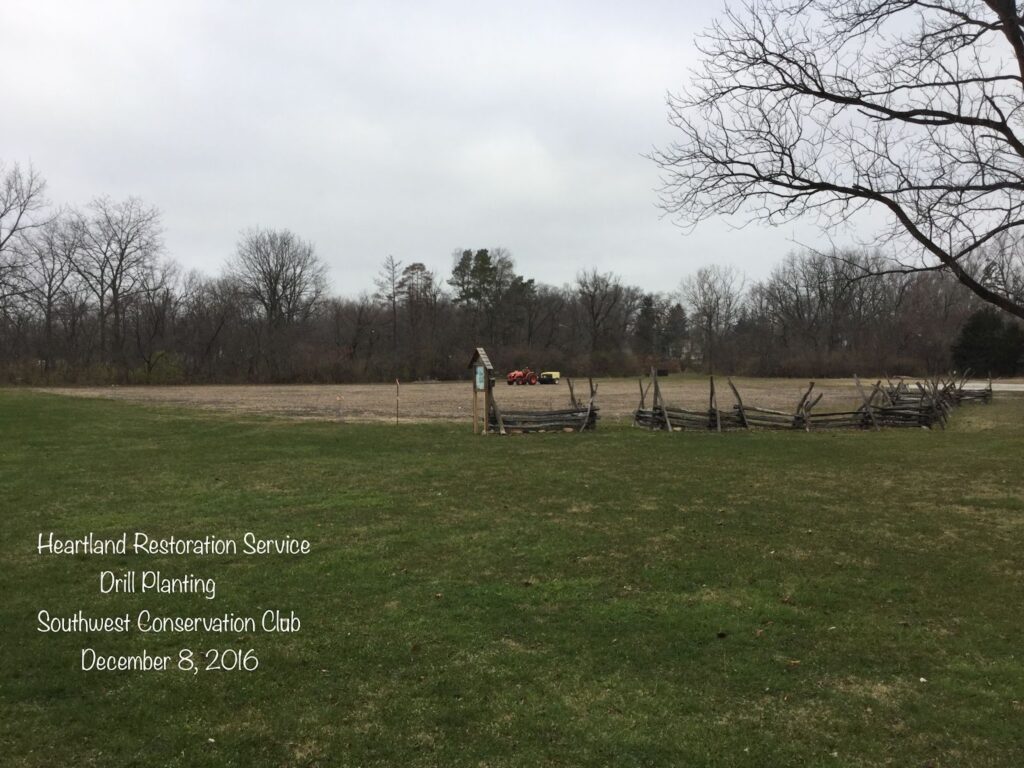
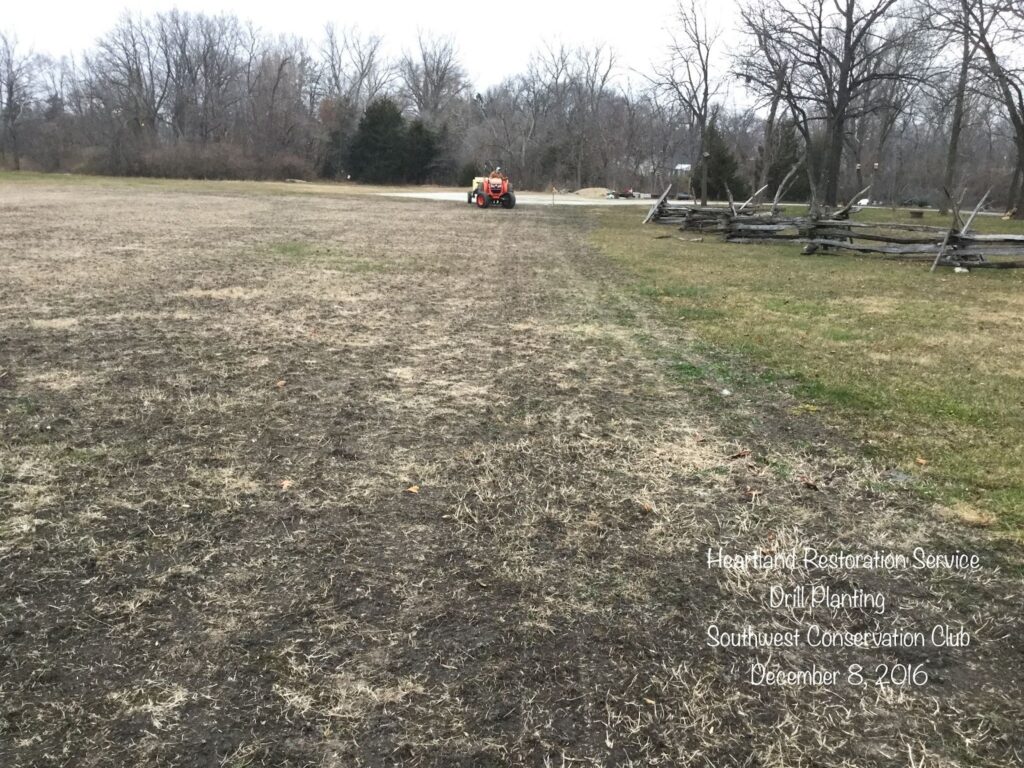
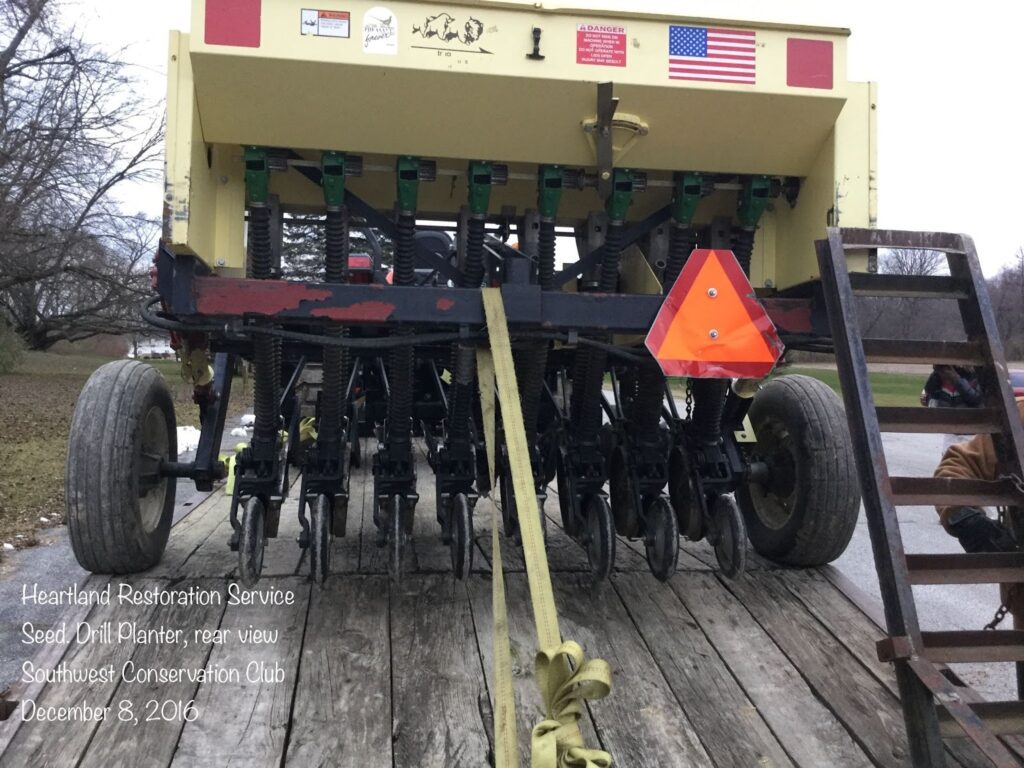
To prepare, the grass had to be cut soil-high or as low as possible. This was done so that the existing grass would not grow higher than the freshly planted native seeds. Next, a native-seed planting drill was used to plant the seeds. Using a hydraulic system, seed box, small tubes and discs, the drill creates 8 swaths/ rows at a time, each about 3 feet deep for the minute seeds to be dropped into. The rows were closed and then a good rain set everything together. The entire project took about 6-8 hours to complete on December 8, 2016.
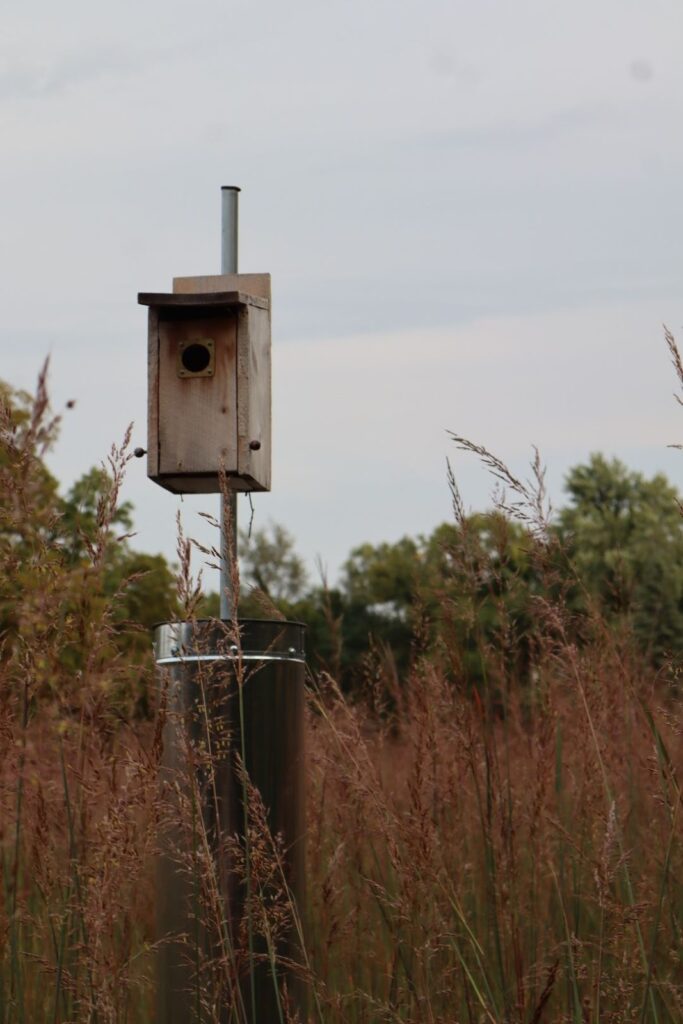
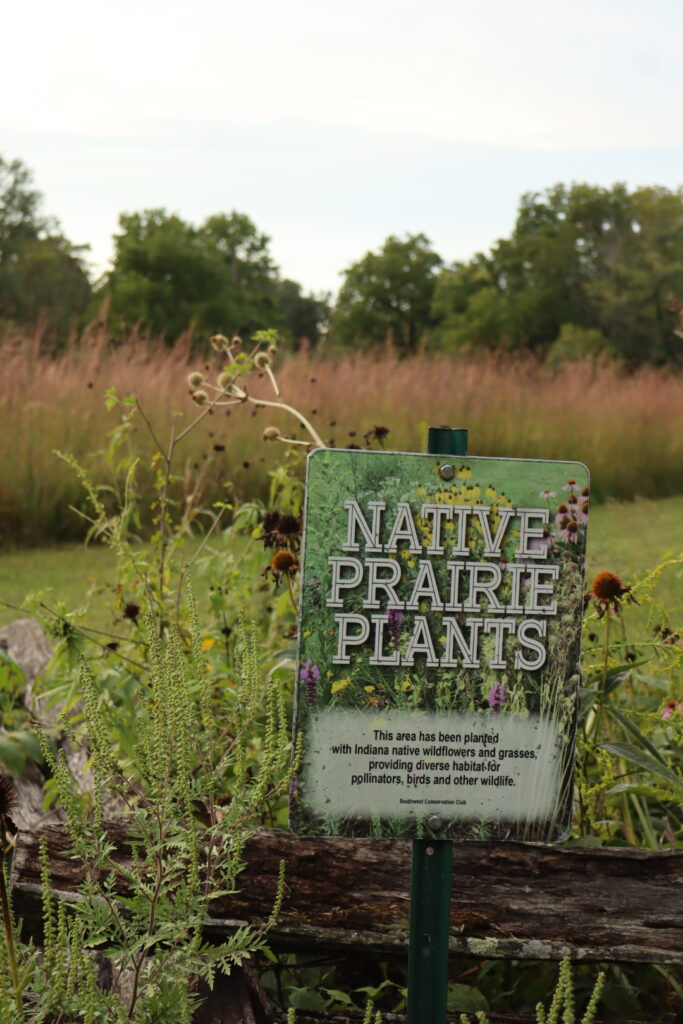
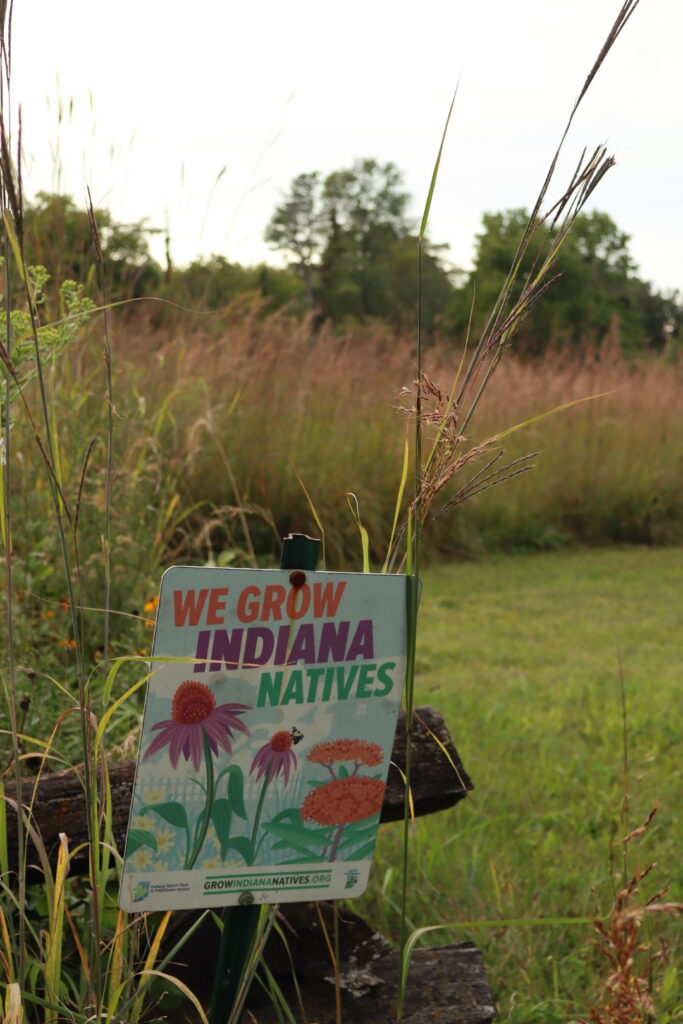
A prairie supports all types of wildlife. Ground animals like rabbits, mice, and squirrels can hide from hawks and other predators; they follow each other’s scent trail to get through the prairie or find a safe place to hide. Other animals like turtles lay eggs, while foxes can play around, hunt, and hide. We have seen up to 20 species of song birds, 4 species of swallows and 5 species of sparrow. The prairie is prosperous because all the different kinds of plants give each other nutrients. The deep root systems are a main component for prairie survival in different climates, giving them access to water deep in the earth so they can survive through a drought, and even through the cold Indiana winter weather.
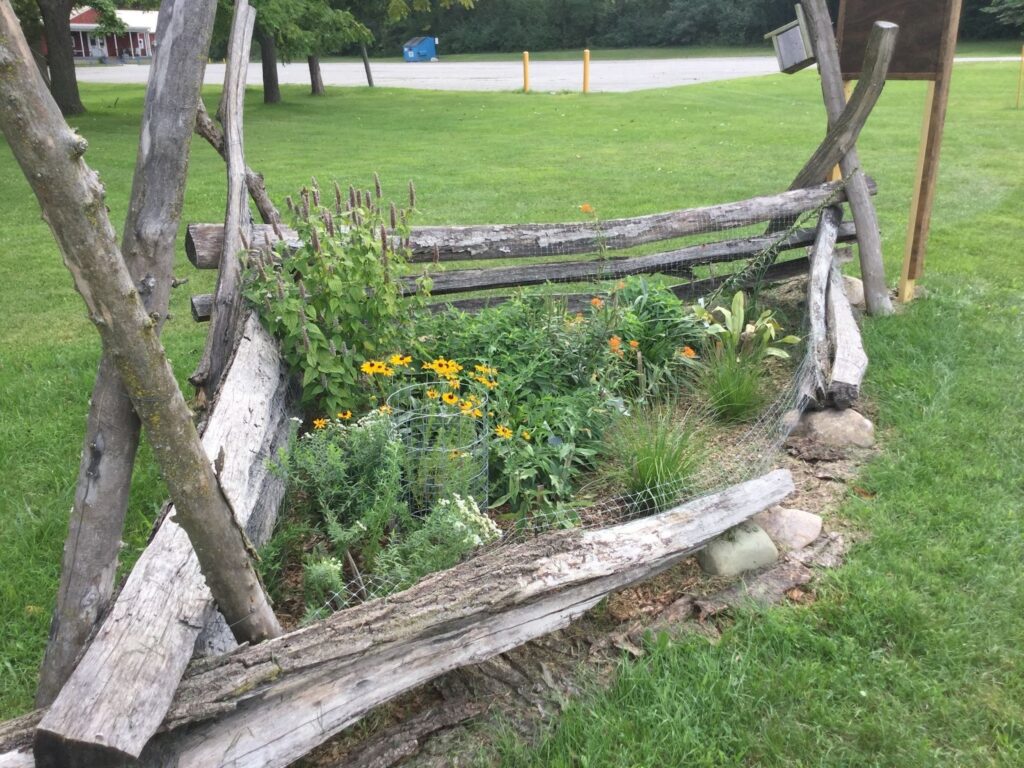
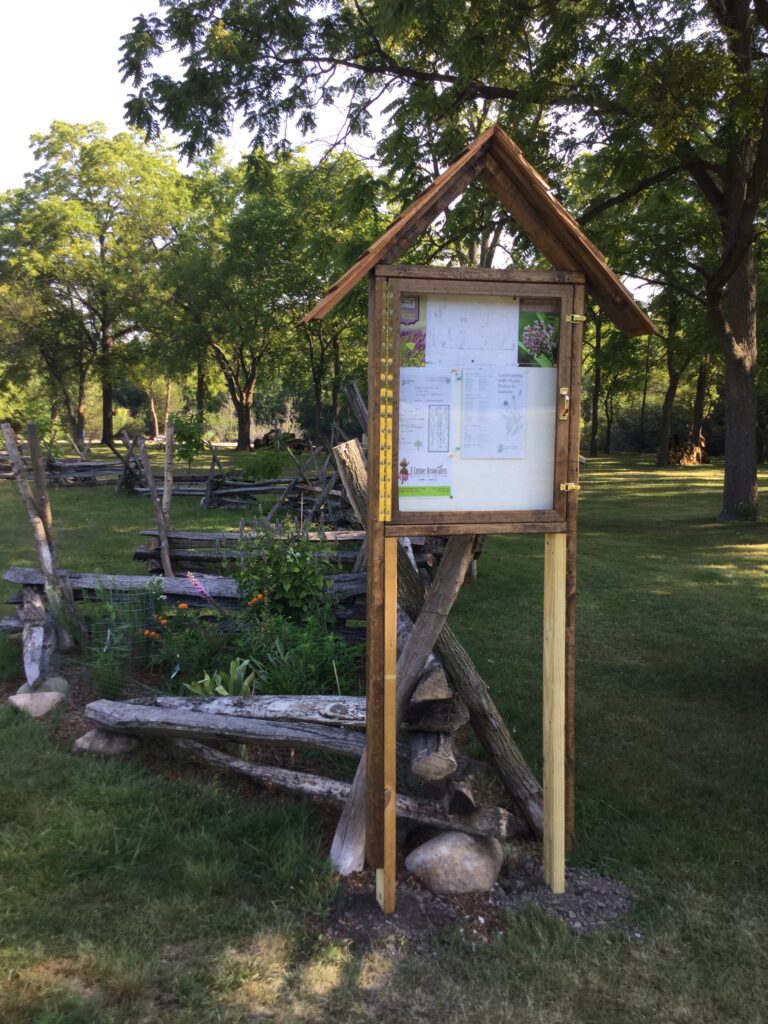
Wanting to dive deeper into this story, I asked Eddie what gave him the idea. He mentioned his late wife Nan, short for Nanette. She was an advanced master gardener and clearly had conservation in mind with knowledge about the idea Eddie had brought to the table. Nan was involved in the construction of the zig-zag split-rail fence, the rain garden, and the signage at the front of the prairie facing the clubhouse. Her and Eddie worked side by side, like two peas in a pod. She knew the rain garden would be an essential part of the prairie as it can help prevent wash-outs, as well as holding water to keep erosion from happening, while also providing food. Eddie explained that the plants had to be native to Indiana because domestic plants will not survive harsh cold weather or provide enough nutrients and will require watering and weeding.
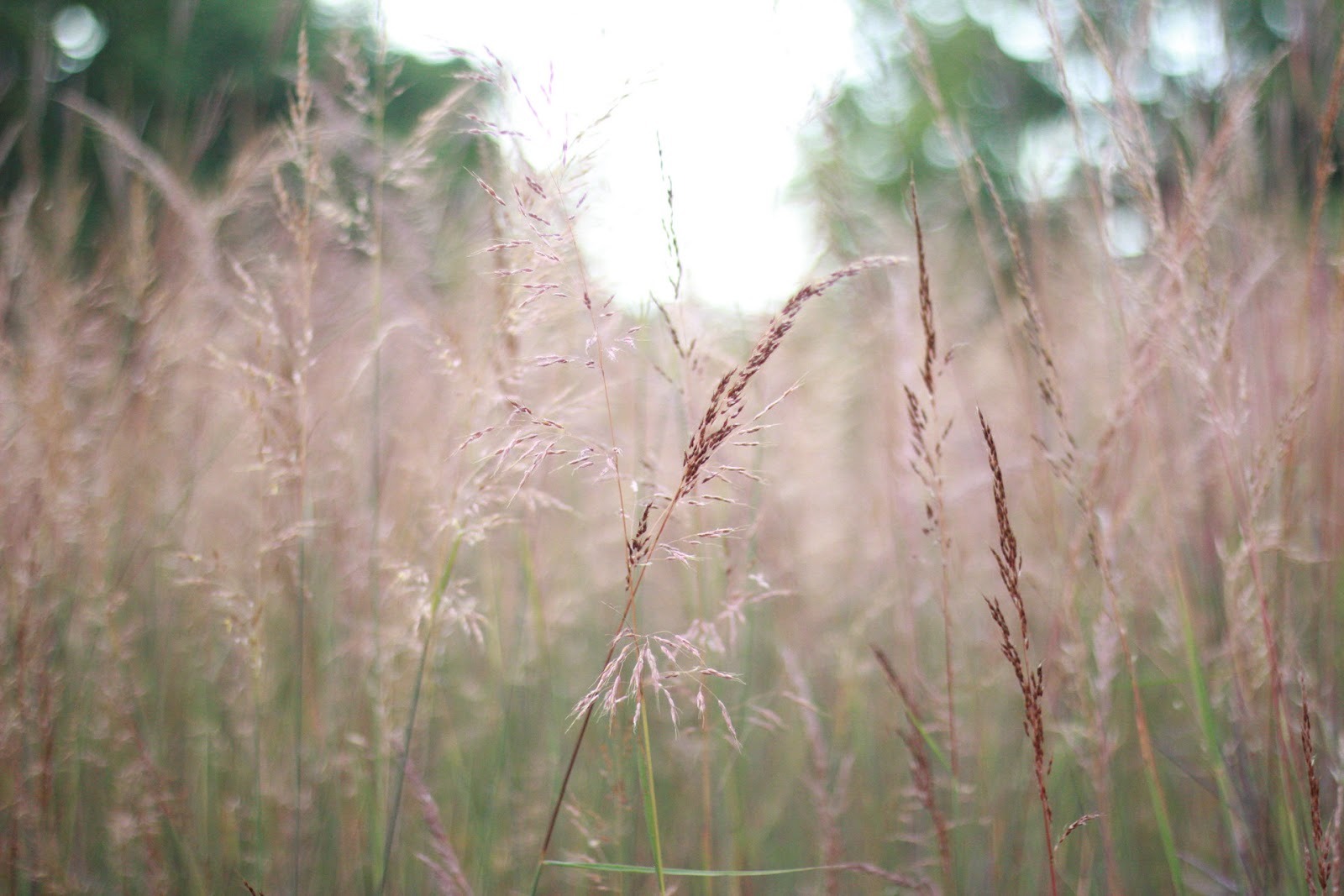
Eddie hopes that the Prairie Project will educate people about all the wildlife and species in the prairie; he mentions we have had a few school field trips to the prairie to check out the wildlife, take samples and learn about the different species. He recommends that you sit on a bench in the prairie on a nice evening, and just listen to the wildlife. I took him up on this, went out to the prairie on a nice chilly evening, listened to the katydids and crickets rub their wings together, creating their iconic sounds. We even heard cicadas singing their song and some small animals rustling through the prairie. Don’t be shy if you’d like to walk through the tall prairie grasses as well, bison trample through similar prairies, just make sure to wear proper attire. I would highly recommend that members come and also take Eddie up on his recommendation to sit and enjoy the natural beauty we have here at the Southwest Conservation Club.